

Together on the Journey: A Weekly Word from Archbishop Hebda
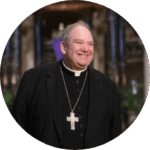
Greetings on this Martin Luther King Day! If your offices are closed for the federal holiday, you might want to spend some time at the Vatican Unveiled exhibit at the Mall of America. I’ve been there three times and have learned something each time. It’s spectacular. You can get tickets online or at the Mall of America.
The exhibit beautifully conveys the importance of the Successor of Peter in the life of our Church. We are so blessed that Jesus founded His Church on the fisherman, Simon Peter, and has blessed us with such strong teaching generation after generation coming from those who have followed him as Bishop of Rome.
You might be surprised to learn how often those Successors of Peter have spoken about the example and legacy of Martin Luther King in ways that are certainly relevant to us in the Twin Cities in these difficult first days of 2026. I haven’t found any references yet from Pope Leo, but his predecessors consistently praised Dr. King.
Pope Paul VI met with Dr. King in 1964 and clearly admired him. In the dark days immediately following the assassination of Dr. King, the Holy Father expressed his hope that the tragic event would prompt “a new common purpose of forgiveness, peace, reconciliation, in the equality of free and just rights,” noting that “our hope grows… as we see that in responsible corners and from healthy hearts grows the desire and the commitment to draw from the iniquitous killing of Martin Luther King an effective overcoming of racial struggles, in hopes of establishing laws and methods of coexistence more in conformity with modern civilization and Christian brotherhood.”
Pope John Paul II and Pope Benedict XVI, in turn, both spoke about the example of Dr. King on their trips to the U.S. On his visit to New Orleans in 1987, Pope John Paul II referred to the “providential role” that Dr. King had played “in contributing to the rightful human betterment of black Americans and therefore to the improvement of American society itself,” while Pope Benedict highlighted on his visit to Washington, D.C., the role that faith had played in Dr. King’s civil rights work.
It was the late Pope Francis, however, who seemed to have had the greatest affinity for Dr. King. When he spoke to the joint houses of Congress in 2015, he mentioned Dr. King four times. On that occasion, he noted that a nation can be considered great “when it fosters a culture which enables people to ‘dream’ of full rights for all their brothers and sisters, as Martin Luther King sought to do.”
Some years later, in 2021, Pope Francis pointed in particular at Dr. King’s legacy of confronting tensions with non-violence: “In today’s world, which increasingly faces the challenges of social injustice, division and conflict that hinder the realization of the common good, Dr. King’s dream of harmony and equality for all people, attained through nonviolent and peaceful means, remains ever timely.”
I’ll always be most grateful, however, for Pope Francis’ inclusion in his 2015 post-synodal apostolic exhortation, Amoris Laetitia, of a long quote from Dr. King that was unfamiliar to me. I remember being a little embarrassed that a pope from Argentina would have greater knowledge of American history than I did. The rather long quotation came from an address that Dr. King delivered at the Dexter Avenue Baptist Church in Montgomery, Alabama, on November 17, 1957. I will conclude this Weekly Word with the quotation because I have found it particularly helpful in my prayer over these past months—and especially in these last days. I hope that it will be helpful for you as well:
“The person who hates you most has some good in him; even the nation that hates you most has some good in it; even the race that hates you most has some good in it. And when you come to the point that you look in the face of every man and see deep down within him what religion calls “the image of God” you begin to love him in spite of [everything]. No matter what he does, you see God’s image there. There is an element of goodness that he can never sluff off… Another way that you love your enemy is this: when the opportunity presents itself for you to defeat your enemy, that is the time which you must not do it… When you rise to the level of love, of its great beauty and power, you seek only to defeat evil systems. Individuals who happen to be caught up in that system, you love, but you seek to defeat the system… Hate for hate only intensifies the existence of hate and evil in the universe. If I hit you and you hit me and I hit you back and you hit me back and so on, you see, that goes on ad infinitum. It just never ends. Somewhere somebody must have a little sense, and that’s the strong person. The strong person is the person who can cut off the chain of hate, the chain of evil… Somebody must have religion enough and morality enough to cut it off and inject within the very structure of the universe that strong and powerful element of love.”
Join more than 85,000 Catholics receiving monthly Together on the Journey videos from Archbishop Hebda. By signing up, you’ll also receive his Weekly Word newsletter:
Read the message on Flocknote.
