
Together on the Journey: A Weekly Word from Archbishop Hebda
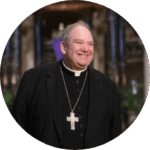
A Blessed Memorial Day to all of you. I was honored this morning to offer Mass at Gethsemane Cemetery and to pray in particular for the brave women and men who have offered their lives in the service of our country. May they rest in peace and their memory be honored.
While we in the United States mark today as Memorial Day, the Church Universal celebrates the Feast of Mary Mother of the Church, a feast added to the calendar by Pope Francis that is to be celebrated each year on the day after Pentecost Sunday.
Even though I’m delighted by today’s feast and will be praying for Fr. Perkl and his parishioners at Mary Mother of the Church in Burnsville, I sometimes think that I would really benefit from a little more time to unpack the graces of Pentecost. I realize that I’m not alone: prior to the liturgical reforms of the Second Vatican Council, the whole Church was called to observe an Octave of Pentecost (much like the Octave of Christmas and the Octave of Easter).
I suspect that those who joined me at the Cathedral on Saturday evening for the extended Pentecost Vigil Mass might share my desire to grow in our understanding of the work of the Holy Spirit. I was delighted that so many participated, and was moved by the series of readings, proclaimed solemnly in the native languages of many of the immigrant communities that have settled here in our Archdiocese. I’m so grateful to those who participated in the intercessory prayer teams, as well as to the Cathedral choir and to the musicians who led us in praise (in both English and Spanish this year!).
I’m particularly appreciative that the extended Pentecost vigil each year begins with the biblical account of the Tower of Babel, which speaks to the many divisions that exist in our society as a result of human pride and ambition. That passage from the Book of Genesis contrasts sharply with the account in the Acts of the Apostles of what happened in Jerusalem on the first Pentecost, when even those divided by language were nonetheless able to hear the Good News proclaimed by the Apostles as if in their own language. The message is clear: the outpouring of the Holy Spirit is an antidote to the divisions of Babel. God’s plan for us is always the best plan—and calls us to community, to life as members of the One Body in the One Spirit.
If you have had a chance to flip through Magnifica Humanitas, the encyclical letter issued by Pope Leo XIV this morning on safeguarding the human person in the time of artificial intelligence, you will have noticed that he too relies on the story of the Tower of Babel. As he looks at the modern landscape, he recognizes the urgency of choosing the road to the new Jerusalem over the road to Babel.
Like Pope Francis before him, Pope Leo reads the story of the Tower of Babel as expressing what happens when we live in a world in which there is no place for God, where profit is more important than human life, in which people are reduced to mere cogs or data, a world of growing inequalities and the loss of human dignity. Pope Leo recognizes that our modern technological advances, if not refocused on the human person, could lead us a new Babel. He raises brilliant questions concerning what happens when the emphasis is placed on speed rather than on critical thinking, or when a system creates a false illusion of objectivity while masking bias, or when it attempts to simulate relationships at the detriment of human relationships, or when it allows power to be concentrated in the hands of the few.
Pope Leo is by no means anti-technology; but he is issuing a wake-up call for all of us, and especially our societal leaders, to assess the role of technology and artificial intelligence. If technology dominates, the human person becomes merely a means—but if technology is guided by wisdom, it can foster true human development. Magnifica Humanitas is a long encyclical that will take hours upon hours to digest, but my sense is that it will be well worth the effort.
Reading this encyclical in the context of yesterday’s celebration of Pentecost, I once again find myself in awe and admiration of how the same Holy Spirit that gave birth to our Church on that first Pentecost has wisely and lovingly directed her for nearly two millennia—and continues to do so today, especially through the leadership of the Pope.
How amazing that the Holy Spirit would have led the Cardinal electors gathered in the Sistine Chapel just a little over a year ago to elect as Successor of Peter a leader who from the first day of his pontificate would express a desire for the Lord’s peace, and a commitment to protecting human dignity. Our Church has once again been blessed with a fine leader, a humble pastor who foresaw the need to build upon the social teaching set forth by Pope Leo XIII and apply it to the changing technological realities of our time. It’s no accident that Cardinal Robert Prevost chose the name “Leo” or that today’s encyclical was signed on May 15th, the very date in 1891 that Pope Leo XIII had issued his groundbreaking encyclical on capital and labor, Rerum Novarum.
This past Wednesday, I was privileged to receive Pope Leo’s blessing at the Papal Audience at the Vatican. While I was at the back of St. Peter’s Square with pilgrims from around the globe, I was delighted to see on the screen that the seminarians from our Saint John Vianney College Seminary who have been studying in Rome this semester had the opportunity to encounter the Holy Father up close. How wonderful that they were able to converse with the Successor of Peter in American English (without relying on an AI translating app on their phones!). The Pope’s stamina is remarkable but his responsibilities unimaginable. Please join me in praying for him as he begins his second year of Petrine ministry.
Join more than 86,000 Catholics receiving monthly Together on the Journey videos from Archbishop Hebda. By signing up, you’ll also receive his Weekly Word newsletter.
